
My son was seven when he asked me why his friend Tyler doesn’t have a dad. We were in the kitchen, pasta on the stove, and he said it like he’d just thought of it and decided to say it out loud. I blanked. Said something like “well, families are all different” and then offered him a snack to fill the silence. He moved on by dinner. I kept thinking about it for the next week.
Not because I said anything terrible. More because I realized I had no real approach for these conversations, and they kept coming, about death, about why some kids had less than others, about something hard happening to a friend at school, and I was winging every single one of them.
I’m not a child psychologist and I want to be upfront about that. I have a friend who works as a school counselor, and I talked to her a lot about this stuff over a few years, and some of what she said genuinely shifted how I think about it, but mostly what’s in here comes from paying attention and getting things wrong and adjusting and trying again, which is basically what parenting is anyway.
Why we avoid these conversations and why that tends to make things worse
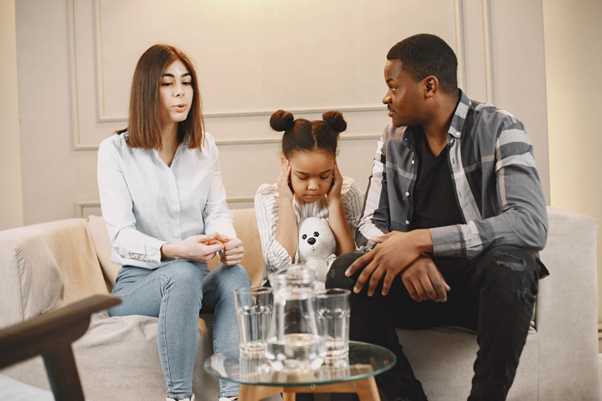
Pretty much every parent I know has avoided at least one of these conversations, and I’ve been no different. I used to tell myself it was because I didn’t know the right words, but looking back I think it was just regular fear. Getting it wrong, making it worse, putting something in their head I didn’t mean to. That’s what was actually going on. I’ve felt all of that at different points.
My counselor friend put it in a way I’ve thought about since. Kids don’t stop wondering about hard things just because we go quiet around them. They just wonder alone, with nothing to go on, and whatever they fill in for themselves is almost always more frightening than the truth. Once I understood that, the goal shifted from saying the perfect thing to just being who they’d actually come to with the question.
What’s actually helped me
The first thing I’d say, and I kept skipping this for years, is to ask what they already think before you explain anything. Kids come into these conversations with ideas already forming, and you don’t always know what those are until you ask. My daughter asked me once where babies come from, and I took a breath and started this whole careful thing, and about a minute in she stopped me to ask which hospital her cousin Lily was born at. That was the actual question. So I ask first now.
Whenever I’m explaining something I have this pull toward covering everything at once, mostly because I don’t want to have to come back to it. But when I pile it all on, my kid usually zones out halfway through and I’ve lost the thread anyway. I’ve gotten more out of just answering what was actually asked and then stopping. The next question tells me where to go.
The hardest part
The hardest one for me is still not jumping to fix things when my kid is upset. My whole instinct is to say it’ll be okay, to get the feeling to stop. But doing that too fast can accidentally tell them their fear was wrong to have, and I’ve found that staying in the discomfort with them a little longer, even when it costs me something, makes more of a difference than anything I could say to wrap it up quickly.
For a long time I thought admitting I didn’t know something was basically failing at the job. But “I honestly don’t know, what do you think?” does something that a half-right confident answer doesn’t, which is show them that a hard question is okay to sit with. Some of the better conversations I’ve had with my kids started from me having no idea.
Going back to a conversation after it happens is probably the most skipped thing on this whole list, and I skipped it for years. Kids don’t finish processing something in one go. They come back to it on their own schedule, sometimes days later, and if the door was left open they’ll walk through it when they’re ready. I try to check in while we’re in the car or doing something else, nothing formal, just a casual “you still thinking about that?” and it gets more out of them than any deliberately set-up conversation I’ve tried.
There’s also no ideal moment for any of this, and waiting for one usually means it doesn’t happen. A lot of the conversations that actually stuck came at random, inconvenient times, already mid-something-else, and I think that’s partly why they worked.
A few notes on specific topics
Death is probably the one parents dread most and the advice I keep coming back to is just to stay honest, keep it simple, and let them tell you how much they want to take in at one time. Kids grieve in a different rhythm than adults do, more like waves that come and go quickly, so following their lead on pace tends to work better than trying to get it all covered in one conversation.
Divorce, or any big family shift, is different in that the thing kids need most is to hear that it’s not their fault, and they need to hear it more than once because once doesn’t really land. It has to come up again, casually, across a few different conversations before it actually settles in.
On racism and inequality, I’d really encourage not waiting until something specific happens to bring it up. Kids who have some language and context around these things before they need it are in a much better position than kids who encounter them cold.
With mental health I try not to make it feel heavy. Just mentioning it the way I’d mention any other thing that can go wrong with a body.
The final thought
A few months ago I gave my daughter some wrong information about something going on at school, and when I realized my mistake I had to go back and tell her I’d gotten it wrong, which felt embarrassing, but she told me later that it was actually kind of helpful for her because she hadn’t really understood before that parents could do that, get something wrong and then come back and say so, and I think about that sometimes when a conversation doesn’t go the way I hoped it would, because you don’t have to be good at this to do it in a way that matters, you just have to be willing to keep coming back to it.